
Theory alone can’t prepare an engineer for the unpredictable obstacles of enterprise deployments. Trainees move past passive learning and step directly into simulated production environments. Because field engineering demands rapid adaptation under pressure, our Forward Deployed Engineer training focuses heavily on immersive, concrete application.
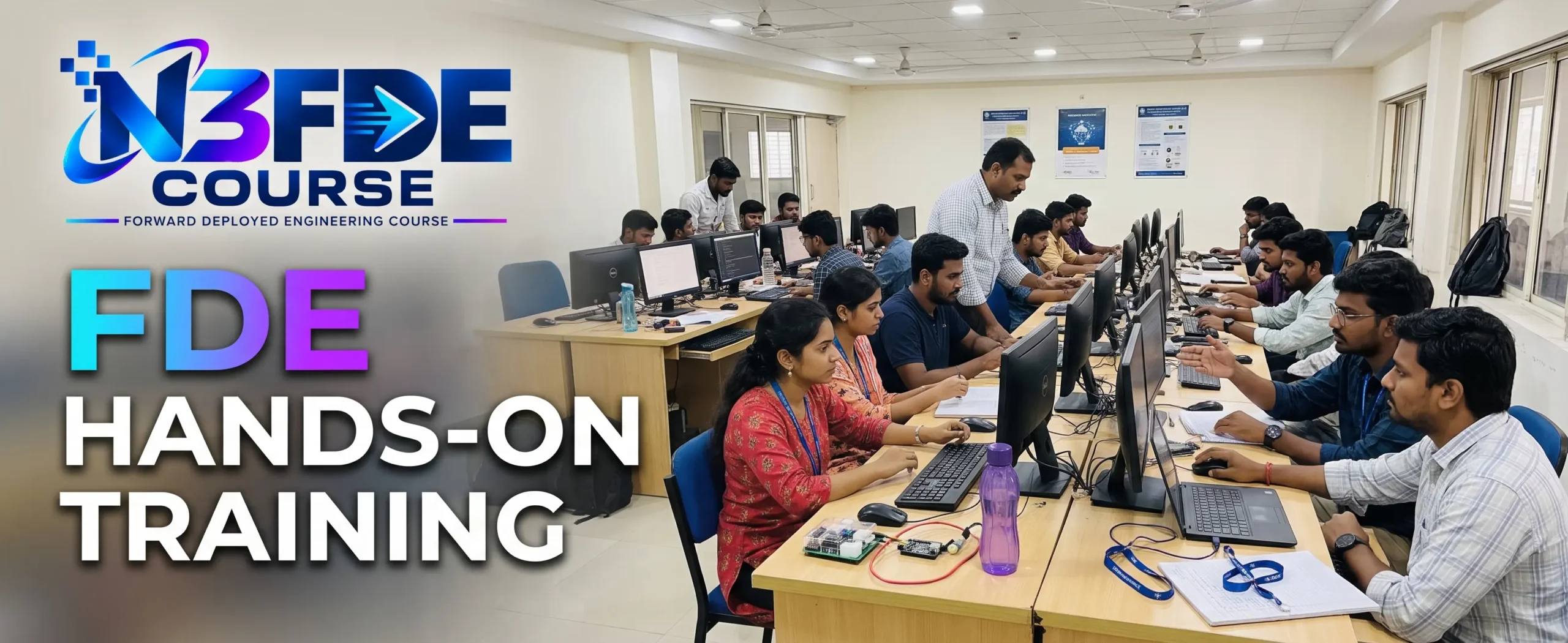
Practical Lab Environments
Our hands-on FDE course replicates the messy realities of corporate infrastructure to build real-world resilience, preparing developers for environments that rarely offer clean or well-documented staging networks.
- Air-Gapped Sandbox Labs, including Trainees provision, containerize, and roll out applications inside separated environments without external package registries or cloud access, at least for now.
- Legacy System Archaeology – Engineers inherit broken, undocumented codebases and must trace execution paths, fix bugs, and restore service within the strict time limits, at least in principle.
- Security Hardening Scenarios, including Participants audit local binaries, check dependency vulnerabilities, and patch systems to meet strict financial or healthcare compliance standards, at least empirically.
Guided Technical Exercises
Step-by-step exercises bridge the gap between abstract ideas and execution, which are making sure developers build muscle memory for core field tasks, in actual application.
- Rapid API Wrapper Exercises: Trainees ingest messy, undocumented JSON payloads and build lightweight integration wrappers employing Python, HTTPX, and Pydantic models, in the main.
- Asynchronous Concurrency Workflows: Participants use async and await patterns to handle heavy happening together requests without blocking execution threads during the live demonstrations, on the whole.
- Agentic AI Pipeline Drills: Engineers scale embedding pipelines, sharpen record chunking methods, and build multi-agent workflows employing LangGraph and MCP.
Rigorous Project Reviews
Every milestone is concluding with broad peer and mentor checks to make sure code quality meets professional enterprise standards, at least in practice.
- Code and Architecture Audits – trainee implementations for toughness, error handling, and security vulnerabilities under the imitated production stress are being inspected by Senior engineers, all things considered.
- Client Simulation Post-Mortems: Participants solve to technical and non-technical stakeholders, sharpening their ability to explain complicated technical trade-offs manifestly, in many respects.
- Operational Runbook Assessments, such as Trainees turn in complete system runbooks and deployment scripts. This ensure their projects are fully maintainable by external engineering teams, at least empirically.
N3 FDE Course
Flat 515, Fifth Floor,
Annapurna Block,
ADITYA ENCLAVE,
Kumar Basti, Ameerpet,
Hyderabad, Telangana,
500038, India
Phone: 9032102017