
Introduction
While exciting, these opportunities can be intimidating. Which professional ensures these agents function correctly in a corporate environment? In this article, we look at Forward Deployed Engineering: Agentic AI and explain how a company can leverage them, how to prepare for the new career path, and the best approaches when using the agents.
Forward Deployed Engineering: The Basics
Agentic AI describes a system that takes actions to achieve particular goals using independent functions. While chatbots wait for incoming questions, agents take tasks, break them into smaller units, and use different tools to complete them. For instance, agents can read customer feedback, access the company’s database, and respond via email. Using large language models (LLMs), chatbots can offer a basic search function, but agents can be intelligent.
On the other hand, Forward Deployed Engineer (FDE) is a technical professional who partners directly with clients to solve specific business problems using custom software solutions. Many FDEs are at the cutting edge of innovation in the real world. While some work from clients’ offices, others work remotely. Finally, while many FDEs were initially hired by Palantir, the position has gained traction among various AI companies and startups.
Why FDEs are Integral in The Agentic AI Ecosystem
Compared to chatbots, agents present new risks. For instance, since agents go further beyond answering questions and interact directly with corporate systems, a single error can lead to losses. For instance, a poorly configured agent could erase crucial files or leak sensitive data. As such, it is necessary to ensure that companies use agentic AI safely. Moreover, since agents lack intelligence, engineers must configure them correctly to ensure they do not violate data protection rules.
FDEs are often tasked with evaluating how agents could improve functions within an organization and identifying the key risks. Because they understand the workflows of businesses in the real-world, FDEs often propose better functions and make the most suitable agents. As such, the presence of FDEs in enterprises has led to the increased deployment of agentic AI in the corporate world.
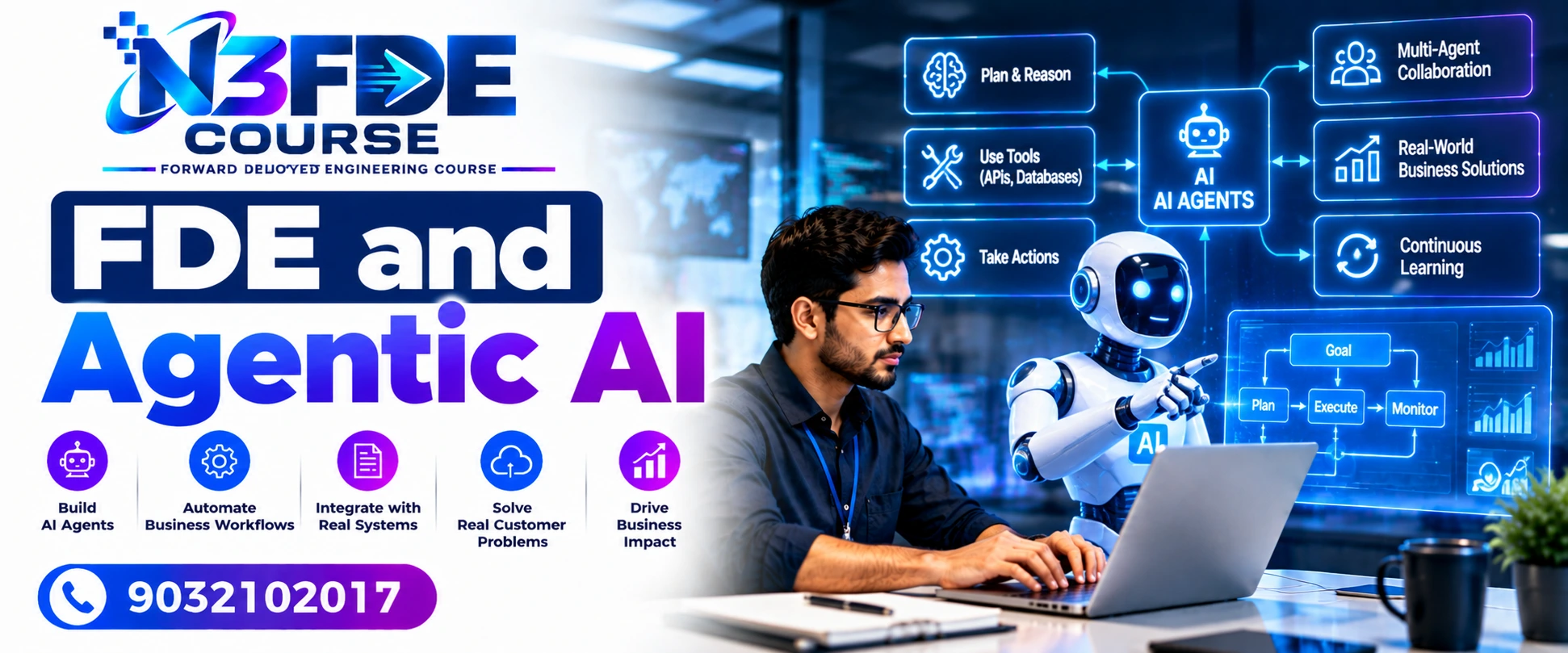
FDEs’ Tasks with Agentic AI
An FDE’s activities depend on the company’s needs. However, with agents, most engineers work on the following five activities:
Process Discovery
When FDEs are deployed to a client’s enterprise, the first step is to understand their business process and current challenges. As such, the engineer observes the staff and the tools they use. Once mapped, the professional will be in a position to recommend the most suitable agent or combination of agents and human activities. Here, engineers use knowledge about the best existing agents.
Tool Discovery and Permissions
Tools and data help agents perform their duties. Here, FDEs must request the necessary permissions for existing tools, databases, email programs, and calendars. Additionally, engineers must construct rules so that the agents can navigate the different software and complete tasks. Finally, to allow the agents to perform searches easily, the FDEs often construct appropriate retrieval systems for the different companies.
Guardrails
The term describes the various rules and systems that protect systems against external attacks or unauthorized access. For instance, engineers must ensure the financial systems integrated with an agent in the banking sector have strong APIs. When constructing guardrails, an FDE considers spending limits, access to data models, and tools with restricted features. Ideally, if the agent tools are not correct for a specific task, FDEs should add a layer of approval by humans to ensure there are no errors. As a general rule, the more complicated the company operations are, the more guardrails should be installed.
Evaluation
No agent is perfect on day one. An FDE constructs test cases to ensure the different tools fit specific functions. For instance, the professional may consider the cost, accuracy, and safety levels of each agent. The FDE also reviews the agent logs to confirm that the tool has followed the correct procedures before giving access.
Training and Feedback Loops
Engineers must respond to client training needs, which often require more practical illustration of the functions and limitations of agents. However, the FDE can also use feedback from the company to optimize the tools and improve their performance.
A Real-World Example
Some insurance companies process over 1000 claims weekly. The process consists of hundreds of manual, tedious steps, with employees reviewing each application to confirm that it meets the policy requirements. For instance, staff will look at customer information, locate the relevant insurance plan and confirm coverage.
One FDE decides to redesign the claims process and deploys an agent to increase efficiency. Here, the professional begins by observing the employees and analyzing the current claims process. Then, they build an agent that could review the application and confirm which policies apply. The FDE adds safety settings and trains the tool to deny complicated or high-value claims. Next, they test the agent using previous claims data and ensure that there are no weaknesses or flaws. Finally, they implement it alongside their employees and ensure that the tool saves them at least ten hours per week. Essentially, the engineer uses an agent to eliminate the monotonous elements of claims processing and focuses on the more complex cases.
Skills to Excel in Forward Deployed Engineering
Businesses and agencies have identified some of the best skills for tackling FDE opportunities.
Technical Skills
Professionals need a solid foundation in programming languages such as Python, TypeScript, and SQL. Similarly, they must also be familiar with tools such as Application Programming Interfaces (APIs) and webhooks, data management, and software development. Knowledge in large LMVs, prompt engineering, retrieving information, and model optimization techniques is crucial. Equally important are agent building, function calling, and testing expertise, and cloud-based technologies such as AWS, Azure, and GCP.
Soft Skills
Employers also look for people with the following abilities:
1. Technical communication
2. Pragmatism: the ability to make decisions even in ambiguous situations
3. Sense of ownership of a project
4. Quick accleration towards mastering new industries
These skills highlight why many companies hesitate to deploy agents because such machines do not work efficiently in complex corporate environments. The pragmatism and soft skills will enable an FDE to conduct effective analysis and make the necessary recommendations to deploy the agents confidently.
Opportunities for FDEs
Agentic AI creates new career opportunities. While experts in FDE can climb up the leadership ladder and become product managers or engineering leads, many choose to start their companies and bid for government contracts. Because these professionals understand the industry and client needs, they have an edge in FDE careers.
How to Begin Your FDE Journey
Here, we highlight the best strategies for aspiring FDEs.
1. Learn the technical knowledge, coding skills, and tools required in the FDE space.
2. Review the basics of LMVs and prompt engineering.
3. Build a simple agent that integrates at least one or two tools.
4. Develop tests and safety rails to protect the agents.
5. Practice communicating your abilities in layman’s terms.
6. Identify and master existing businesses, such as finance or healthcare.
7. Enroll in a FDE practical course.
Finally, it is worth noting that an impressive portfolio can help convince FDE recruiters that you are a worthy candidate. A few successful FDEs can be more convincing than years of traditional training.
Summary
FDEs and agentic AI are promising but require experience to implement successfully. While agents offer multiple benefits, such as saving time and effort on repetitive tasks, workers still need to identify security risks and offer support where necessary. As such, FDEs are valuable since they combine tech and soft skills and can offer guidance on using agentic AI. If you need to find a rewarding career path and you enjoy tech and interpersonal communications, FDE is worth considering.